Showing posts with label homework. Show all posts

Monday, November 3, 2008

Observations on the History of Oil Painting.

Use your research from this term and concepts and terms we’ve discussed in class to make some general observations about the history of oil painting.

Use these questions to guide your writing:

Who have been the major players throughout the history of oil painting? Why is this so?

Who seems to be missing from the history of oil painting? Why is this so?

Where in the world did most oil painting taking place?

Where did all these oil paintings go? Why? How does where these paintings “live” affect who learns about them and why?

How has subject matter changed over time? Why?


Be sure to use specific examples to back up your opinions (some of these examples can be from your own personal experiences).

Tuesday, October 28, 2008

Why oil paint?

Do a little research on the history of oil paint.

Where does it come from? What is it made of? When was it invented?

Using your experiences this term, the concepts and terms we’ve discussed in class, and examples from art history to back up your opinions answer the following question:

WHY OIL PAINT?

With all the choices of materials out there for artmaking, especially in this day and age, why do artists still turn to oil paint? What does oil paint do that other materials don’t do?

Wednesday, October 22, 2008

What is a portrait?

Look in the art folder on class conferences for a folder labeled Portraits.
Within this folder there are two more folders, one labeled paintings and one labeled Not Paintings.
Please look through them both.

In a post on your blog address the following questions/issues.
Remember to use vocabulary/concepts we’ve discussed in class and to use specific examples from the paintings to back up your ideas.

What is a portrait?

Choose three portraits, paste them into your post (include the artists’ names) and describe how the artist uses color, composition, and subject matter (objects, setting, clothing, etc.) to communicate something about the person whose portrait they’ve made OTHER than what the person looks like.

How do the artists you’ve chosen address the concept of portrait? How do they work within the tradition of portrait-making OR how do they reinvent the concept of a portrait?

Saturday, October 18, 2008

A Sense of Place homework update.

A few people have emailed me about the files on First Class not opening properly. I just reloaded all the pictures to the Art folder in the Oil Painting 2 class folder. If you're having trouble look there regardless of which class you're in. Email me if you're still having trouble.

I'll be looking for updated blogs tomorrow evening as I calculate mid-term grades.

Sunday, October 12, 2008

A Sense of Place.

On class conferences you will fins a folder labeled ART.
Open it and look at ALL the images in the secondary folder labeled A Sense of Place.
Choose two paintings with very different MOODS and do the following:
  • Paste them into a post on your blog. Be sure to include the artists' names. 
  • Describe the moods of the two paintings.
  • Describe HOW the artists created the moods using specific examples from the paintings and the vocabulary we've developed so far this term.

Tuesday, October 7, 2008

Where are you at?

As we approach mid-term please take some time to reflect on your experience in the course up to this point by answering the three questions listed below. 

Be sure to use SPECIFIC examples form your paintings or your experiences in class to support your ideas.

What has been the most challenging aspect of the course so far?
In what areas have you progressed the most and how have you progressed?
How does looking at examples of painting from throughout history affect us as painters today?

Monday, September 29, 2008

SOME famous paintings.

Below you will see some paintings that are considered famous and important to the history of painting. 

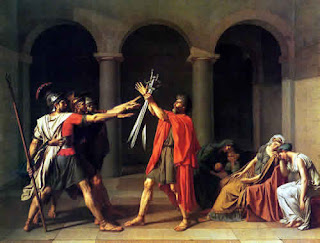
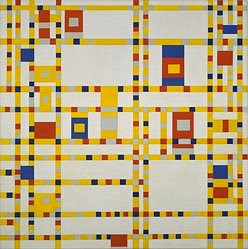
Select the one YOU think is most interesting and describe it in detail on your blog in terms of color, composition, and texture using the terms we've learned in class. Do NOT put the picture in your post. Use its title and the name of the artist and your description skills to "paint" the picture.

Do  little research on the painting. Find out who made it and where they are from. What is the painting about?

Then, describe why you chose this painting as the most interesting one and why you think it is considered important to the history of art.
Rites of Spring by Sandro Botticelli                  
The Mona Lisa by Leonardo daVinci
 
The Persistence of Memory by Salvador Dali
The Oath of Horatii by Jaques Louis David
Water Lilies by Claude Monet
American Gothic by Granty Wood
Broadway Boogie Woogie by Piet Mondrian
Desmoiselles d'Avignon by Pablo Picasso

Nighthawks by Edward Hopper

Nude Descending a Staircase by Marcel Duchamp

Monday, September 22, 2008

Creating the illusion of surface and texture

In the paintings below you will find many different types of textures and surfaces (reflective, transparent, shiny, rough, etc.). What did these artists DO to create these illusions? Use specific examples form the paintings in your description and be sure to use the vocabulary we've discussed in class.
Still LIfe With a Ginger Jar, Paul Cezanne

Vase of Flowers (plus detail), Jan Davidsz de Heem

Chair, Vincent Van Gogh


Banquet With Mince Pie (plus detail), Willem Claesz Heda

Still Life With Fish and Vegetables, Jean Simeon Chardin


Still Life With Peaches and a Silver Goblet, Jean Simeon Chardin

Monday, September 15, 2008

Using composition as a tool

We have been and will be using everyday objects as the subjects of our paintings. At times you might feel like you're not getting to tell a story or create an exciting painting because you aren't always able to select the objects you paint. One way to make a required still life YOURS is to use composition as a tool.

Composition is the placement or arrangement of visual elements or ingredients in a work of art. It can also be thought of as the organization of the elements of art (color, line, shape, form, space, texture) according to the principles of art (movement, balance, emphasis, contrast, proportion, pattern, rhythm).

Look carefully at the paintings below. In which painting does the composition take the painting beyond being just a picture of everyday objects? Which composition is the most interesting and why? 

Choose the painting you think answers these questions and paste it into a post on your blog (don't forget to add the title, artist, and date). Answer the questions above using the vocabulary we've been building in class.
Still Life With Three Puppies, by Paul Gaughin, 1888

Custard Cascade, by Will Cotton, 2001

Still Life With Watermelon, by Fernando Botero, 1992

Lemons on a Pewter Plate, Henri Matisse, 1926

Wednesday, September 3, 2008

Morandi vs. Van Gogh: Color

Below you see two paintings by Giorgio Morandi and two paintings by Vincent Van Gogh.

Describe the differences between the artists' choices of color palette and subject matter in these particular paintings.

Also, how does the choice of color palette influence or affect the subject matter?

Still Life, 1955, Giorgio Morandi

Still Life, 1955, Giorgio Morandi

Irises, 1890, Vincent Van Gogh

Sunflowers, 1888, Vincent Van Gogh